Free Certificates in South Africa
South Africans looking for free certificates, free courses and skills-development opportunities often face the same problem: information is scattered across dozens of websites, some of it outdated, and some of it misleading about what you actually receive at the end. This page brings together, in one place, free and low-cost learning opportunities relevant to South African job seekers, students and career-changers — from government-linked training bodies to global technology companies and established online learning platforms.
This guide is for anyone building new skills on a limited budget: matriculants deciding what to study next, job seekers strengthening a CV, employees upskilling for a promotion, or small business owners learning digital and business skills. You’ll find opportunities across technology, business, finance, healthcare, construction, customer service, entrepreneurship and more — not just IT.
We have also built this page to protect you, not just list opportunities for you. Free certificates vary enormously in what they actually are: some are genuine accredited qualifications, others are short courses, and others are simple certificates of completion with no formal accreditation at all. Before you enrol in anything, this page will help you understand exactly what you’re getting, how to check whether a provider is legitimate, and how to avoid common scams. That’s also why it’s worth bookmarking — we update the directory below as we verify new opportunities, and it’s easier to check back here than to search the internet from scratch each time. If it helps you, consider sharing it with a friend, family member or classmate who’s job-hunting or studying.
How This Free Certificate Guide Works
The opportunities on this page come from a range of legitimate sources, including:
- Government and public institutions
- Sector Education and Training Authorities (SETAs)
- Universities, colleges and public TVET (Technical and Vocational Education and Training) colleges
- Private companies and technology companies
- Established online learning platforms
- Non-profit organisations
- Other training providers we have reviewed
Not every opportunity listed is a formal qualification. Some are certificates of completion, some are short courses, and some are structured skills programmes. Where possible, we tell you exactly which type you’re looking at (see our “Certificate vs Qualification” explainer below), because this affects how much weight the certificate carries on a CV or job application.
Because course availability, pricing and closing dates change often, always check the details on the provider’s own official website before you apply or enrol — treat everything here as a starting point for your own research, not a final confirmation.
Government and Public-Sector Opportunities
Several South African public institutions play a role in education, training, qualifications and skills development — though most of them set standards or fund training rather than issuing free certificates to the public directly. Understanding what each one actually does will help you tell the difference between a government-linked opportunity and a provider simply claiming government backing.
Department of Higher Education and Training (DHET) DHET is the national government department responsible for post-school education and training policy in South Africa, including universities, TVET colleges and skills development programmes. DHET itself does not typically hand out free certificates directly to the public, but it sets the policy framework that public colleges and SETAs operate under.
Sector Education and Training Authorities (SETAs) SETAs are organisations responsible for funding and coordinating skills development within specific industry sectors (for example, there are SETAs for services, manufacturing, media, and other sectors). Some SETAs fund learnerships and skills programmes, sometimes at no cost to the learner, but eligibility and available programmes vary by SETA and by year.
South African Qualifications Authority (SAQA) SAQA maintains the National Qualifications Framework (NQF) and is the body that determines whether a qualification is formally recognised in South Africa. SAQA does not run courses itself — its role is to register and verify qualifications, which makes it a useful place to check whether a “qualification” you’ve been offered is genuinely recognised.
Quality Council for Trades and Occupations (QCTO) QCTO oversees occupational qualifications linked to specific trades and occupations, including quality-assuring learnerships and skills programmes in this category.
Umalusi Umalusi is the quality council responsible for general and further education and training, including quality-assuring school-leaving qualifications and some vocational qualifications.
Public TVET Colleges Public TVET colleges offer accredited vocational and occupational programmes across South Africa, some free or subsidised depending on funding schemes such as NSFAS, and some fee-based. Programmes and funding availability vary by college and by year.
Important: Because government programmes, funding schemes and SETA offerings change frequently (often year to year), do not treat anything above as a guarantee of a current free opportunity. Always verify directly on the relevant official website before making decisions or applying.
Free Online Courses and Certificates
Not all “free” courses work the same way, and understanding the difference will save you time and prevent disappointment:
- Completely free, including the certificate — you pay nothing at any stage, and receive a certificate at no cost once you finish.
- Free to learn, but the certificate costs money — you can access all the course material for free, but if you want an official, verifiable certificate at the end, there’s a fee.
- Certificate of completion only — you receive proof that you finished the course, but this is not the same as a formal, accredited qualification (see our comparison table below).
- Recognised or accredited programme — the course leads to something formally recognised within South Africa’s qualifications framework, or by a professional body.
- Purely educational resource — some “free courses” are really just learning material or tutorials with no certificate offered at all.
Before enrolling in anything, check the provider’s course page for the words “certificate,” “accredited,” “certification exam,” or “fee” — these usually tell you which category you’re in. If it’s unclear, contact the provider directly and ask.
Private Companies and Organisations
Many private companies — especially technology companies — offer free learning opportunities as part of their community or talent-development programmes. We organise these by field so you can find opportunities relevant to your career interests:
Technology — Opportunities from companies such as Cisco, Google, AWS and similar organisations, covering IT support, cloud computing, networking and programming basics.
Business — General business skills courses covering topics like project fundamentals, workplace communication and business writing.
Finance — Introductory finance, budgeting and financial literacy courses from banks, fintech companies or learning platforms.
Administration — Office administration, Microsoft Office and general workplace-readiness courses.
Digital Marketing — Courses on social media marketing, search marketing and digital advertising fundamentals, often from platforms like Google.
Data — Introductory data analysis, spreadsheets and data literacy courses.
Cybersecurity — Beginner cybersecurity awareness and fundamentals courses, such as those from Cisco and Fortinet.
Entrepreneurship — Small business, start-up and self-employment skills courses.
Customer Service — Communication, service-standards and client-handling courses relevant to retail and hospitality roles.
Workplace Skills — General employability skills such as workplace communication, time management and teamwork.
Free Certificates by Career Interest
IT & Technology — Useful for anyone considering IT support, software, networking or systems roles. Courses often cover computer literacy, operating systems and introductory programming. Certificates here are usually completion certificates for beginner content, with paid formal certifications available at a more advanced level. These skills complement further study or hands-on IT experience.
Cybersecurity — Suited to people interested in protecting systems and data, a fast-growing field in South Africa. Beginner courses cover security awareness and fundamentals; more advanced, often paid, certifications cover technical skills like penetration testing. Best paired with practical, hands-on lab practice.
Business & Administration — Useful for office, admin and support-role job seekers. Covers workplace communication, office software and basic business processes. Typically completion certificates rather than formal qualifications, but valuable for entry-level roles.
Finance — Suited to those interested in banking, bookkeeping or personal finance careers. Covers budgeting, financial literacy and introductory accounting concepts. Complements formal finance qualifications rather than replacing them.
Construction — Relevant for those interested in the built environment and trades. Look for skills programmes and learnerships linked to SETAs and TVET colleges rather than generic online certificates, since construction-related work often requires formally recognised, practical qualifications.
Engineering — Similar to construction — free introductory online content can build foundational understanding, but formal engineering careers require accredited qualifications through recognised institutions.
Healthcare — Free general-awareness courses (e.g. basic health and safety) can be useful, but healthcare roles almost always require formally accredited qualifications through recognised institutions — be especially cautious of any “free certificate” claiming to qualify you for clinical work.
Retail — Useful for customer-facing roles. Courses on customer service, communication and basic sales skills can strengthen a retail CV, typically as completion certificates.
Customer Service — Communication, conflict-handling and service-standard courses are widely available for free and directly useful across many entry-level roles.
Digital Marketing — A fast-growing, accessible field. Free courses from companies like Google can teach real, applicable skills in social media, search and content marketing.
Data & Analytics — Useful for those interested in working with information and reporting. Free introductory courses cover spreadsheets and basic analysis; more advanced data careers require deeper, often paid, technical training.
Entrepreneurship — Useful for small business owners and those wanting to start one. Covers basics like budgeting, marketing and business planning.
Communication — General workplace communication courses benefit almost every career path and are widely available for free.
Project Management — Introductory project management courses build foundational understanding; formal project management certifications (which typically require exams and fees) carry more recognised weight professionally.
Personal Development — Time management, workplace confidence and general soft-skills courses complement technical learning in any field.
Can I Put a Free Certificate on My CV?
Yes — a free certificate can strengthen a CV, especially for entry-level roles, as long as you present it honestly and accurately. Employers generally respond well to evidence that you’ve taken initiative to build relevant skills.
How to list it, using a simple format:
Course Name: [Exact name as it appears on your certificate]
Provider: [Organisation that issued it]
Completion Date: [Month/Year]
Skills Learned: [2–4 relevant skills]
Certificate/Credential Number: [If applicable — include if the certificate can be verified online]
What not to do:
- Don’t call a short online certificate a “diploma” or “degree” — this is misleading and can be checked by employers.
- Don’t list every single free course you’ve ever started; list the ones genuinely relevant to the job you’re applying for.
- Don’t imply a certificate of completion is an accredited qualification if it isn’t — see the comparison below.
- Don’t claim a certificate “guarantees” skills or employment you haven’t actually demonstrated.
Certificate vs Qualification
| Type | What it actually means | How much weight it carries |
|---|---|---|
| Certificate of Completion | Confirms you finished a course. Often no formal assessment or accreditation involved. | Shows initiative and interest; limited formal recognition on its own. |
| Short Course | A focused course on a specific topic, sometimes assessed, sometimes not, usually not leading to a full qualification. | Useful supporting evidence of a specific skill. |
| Skills Programme | A structured, often SETA-linked programme covering specific unit standards or skills, sometimes leading toward a fuller qualification. | Carries more formal recognition, especially within the sector it relates to. |
| Learnership | A structured programme combining theoretical learning and workplace experience, registered with a SETA, usually leading to a registered qualification. | Carries significant formal and practical recognition. |
| Qualification | A formally registered outcome on South Africa’s National Qualifications Framework (NQF), such as a certificate, diploma or degree from an accredited institution. | Carries the most formal recognition and is generally required for regulated professions. |
If you’re ever unsure what category something falls into, check the provider’s own materials for the specific wording they use, and where relevant, verify registration on SAQA‘s official website.
How to Check if a Certificate Is Legitimate
Before enrolling in anything, work through this checklist:
- Who provides the course?
Is it a named, identifiable organisation (a company, university, or recognised platform) rather than an anonymous website? - Is there an official website?
Legitimate providers have a real, professional website — not just a social media page or a generic contact form. - What exactly do you receive?
A PDF certificate? A verifiable credential? Be clear on this before you start. - Is it accredited?
Some certificates are, some deliberately aren’t, and that’s fine as long as it’s clearly stated. Be wary if this isn’t mentioned at all. - If accreditation is claimed, who accredits it?
A real accrediting body (like SAQA, QCTO, or a recognised international body) should be named and checkable. - Is there an assessment?
Genuine skills-based certificates usually involve some form of test, quiz or project — a certificate with zero assessment is worth less. - Are there hidden costs?
Check for “optional” exam fees, printing fees, or “processing” charges that appear only after you’ve registered. - Does the certificate have verification?
Can an employer check that it’s real, e.g. via a certificate ID or verification page? - Are the application details legitimate?
Be cautious of providers asking for unusual personal information (ID numbers, banking details) just to access a free course. - Are you being asked to pay someone personally
(an individual’s bank account rather than a registered business) to access a “free” certificate? This is a major red flag.
When in doubt, verify claims — accreditation, closing dates, cost — directly on the provider’s own official website rather than relying on any third-party listing, including this one.
Questions to Ask Before Enrolling
- Is the course itself free?
- Is the certificate free, or does it cost extra?
- Who issues the certificate?
- Is an assessment required to earn it?
- How long does the course take?
- Can I study online, at my own pace?
- Are there eligibility requirements (age, location, education level)?
- Is the provider a legitimate, identifiable organisation?
- Is the programme accredited, and by whom?
- Are there any hidden charges?
- Can the certificate be verified by someone else, like an employer?
How to Choose a Certificate Worth Your Time
Collecting many certificates is not automatically better than collecting a few relevant ones. A certificate is worth your time if it:
- Teaches a skill you’ll actually use
- Matches a specific career goal, not just “something to do”
- Comes from a credible, identifiable provider
- Has clear, specific course content (not vague marketing language)
- Involves genuine learning — some form of test, project or practical component
- Complements your existing education or work experience, rather than duplicating it
A shorter list of relevant, well-chosen certificates is more useful on a CV than a long list of unrelated ones.
Free Certificates for Job Seekers
If you’re actively job hunting, free certificates work best alongside your job search, not instead of it. A few examples of how to match learning to your goals:
If you’re interested in administration, consider building skills in:
- Computer literacy
- Microsoft Office (Word, Excel)
- Customer service
- Office administration basics
If you’re interested in IT, consider building skills in:
- Networking fundamentals
- Cybersecurity basics
- Cloud computing fundamentals
- Introductory programming
- Technical support skills
Certificates are strongest when they support real, demonstrable skills and experience — for example, practising in Excel yourself, not just watching a video about it — rather than standing in for practical ability entirely.
Browse current listings on our Jobs & Opportunities and Learnerships pages to see what employers are currently asking for, and choose certificates that match those requirements.
Moja Mzansi Free Certificate Directory
Moja Mzansi focuses on free online courses that can help South African students, job seekers and working professionals develop practical skills. Before adding a course to this directory, we look at the course provider, whether the learning material is genuinely accessible for free, whether a certificate is available, the skills covered and how the course may support further study or employment.
-
Free Online Courses on Coursera 2026: Learn Excel, AI, Coding, WordPress
If you are looking for free online courses in 2026, Coursera has a range of learning opportunities covering technology, business, communication, artificial intelligence, web development, design and workplace productivity. These courses can be useful for South African students, job seekers, graduates, entrepreneurs and working professionals who want to develop practical skills without committing to a…
-

Microsoft AI Skills Programme 2026 – Apply for Free Training
Applications Open: Build Your Future With Free AI and Microsoft Skills Are you looking for a Microsoft AI Skills Programme 2026 that can help you develop valuable skills in artificial intelligence, cloud computing, cybersecurity, data and Microsoft technologies? The YES x Microsoft Elevate AI Skills Initiative is providing South Africans with access to free learning…
-
MICT SETA IoT Skills Programme 2026 – Apply for IoT, Robotics and Entrepreneurship Training
Are you interested in Internet of Things (IoT), robotics, programming and technology entrepreneurship? A new 3-month IoT Skills Programme is inviting applications from eligible participants in the Vhembe District. The programme is endorsed by the MICT SETA and is offered by Greycode (Pty) Ltd, in partnership with the University of Venda (UNIVEN) Centre for Entrepreneurship…
-
Free Typing Course Online – Learn Typing Skills
Looking for a Free Typing Course Online? Typing.com provides free typing lessons that can help beginners improve their typing speed, accuracy and keyboard skills. Typing is an important digital skill in today’s workplace. Whether you are applying for jobs, completing assignments, writing emails or working in an office environment, being able to type accurately can…
-
Free Basic Computer Skills Course Online
Looking for a Free Basic Computer Skills Course? This beginner-friendly online course can help you learn essential computer skills and become more confident when using a computer. The course is also designed to help learners understand how to successfully take online courses. This makes it useful for students, job seekers, beginners and anyone who wants…
-
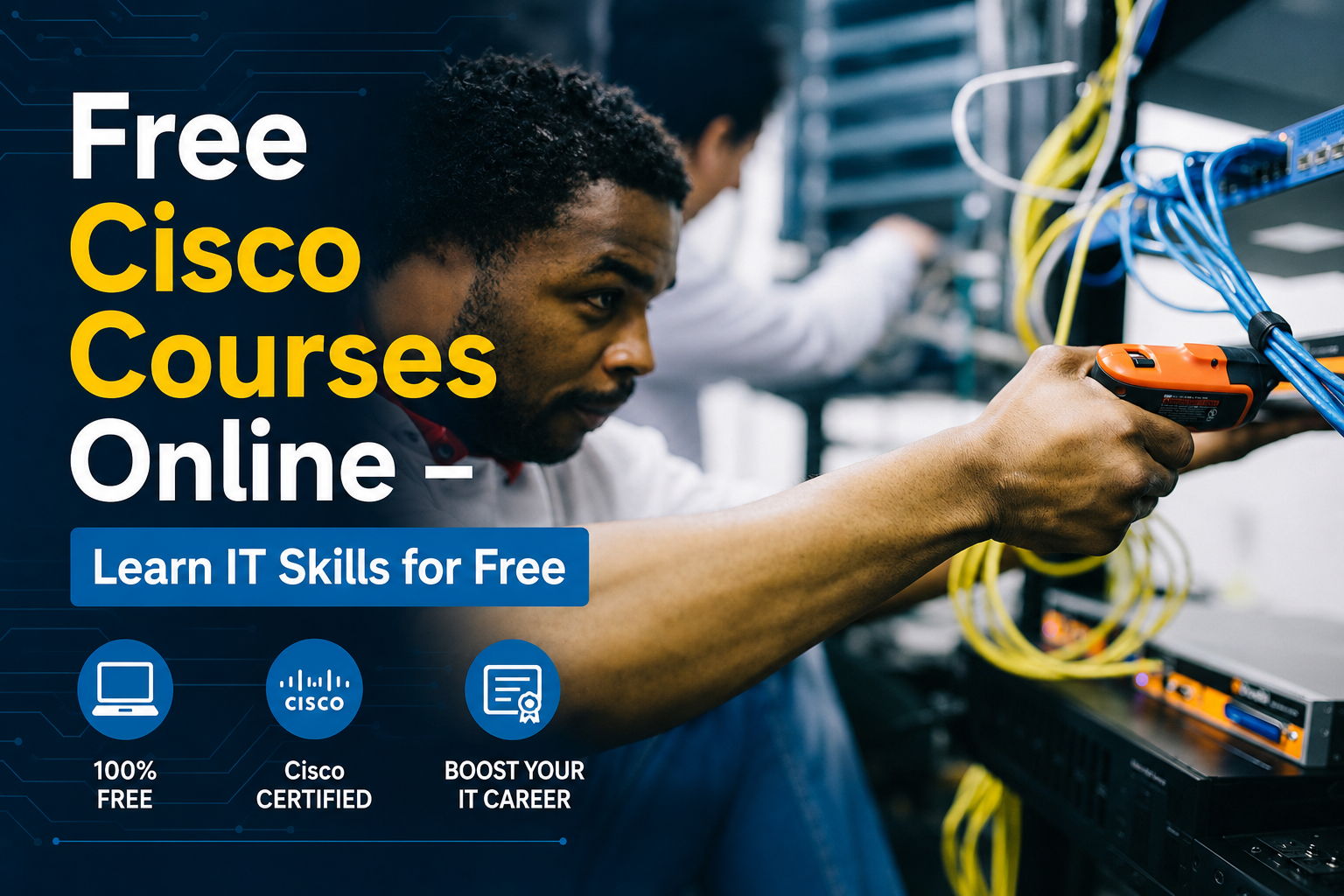
Free Cisco Courses Online – Learn IT Skills for Free
Looking for free Cisco courses online? Cisco Networking Academy offers beginner-friendly courses that can help you build basic IT skills in computer hardware, cybersecurity and networking. These courses are suitable for students, graduates, job seekers and anyone interested in technology. In addition, they can help you explore different IT career paths before choosing a more…
-
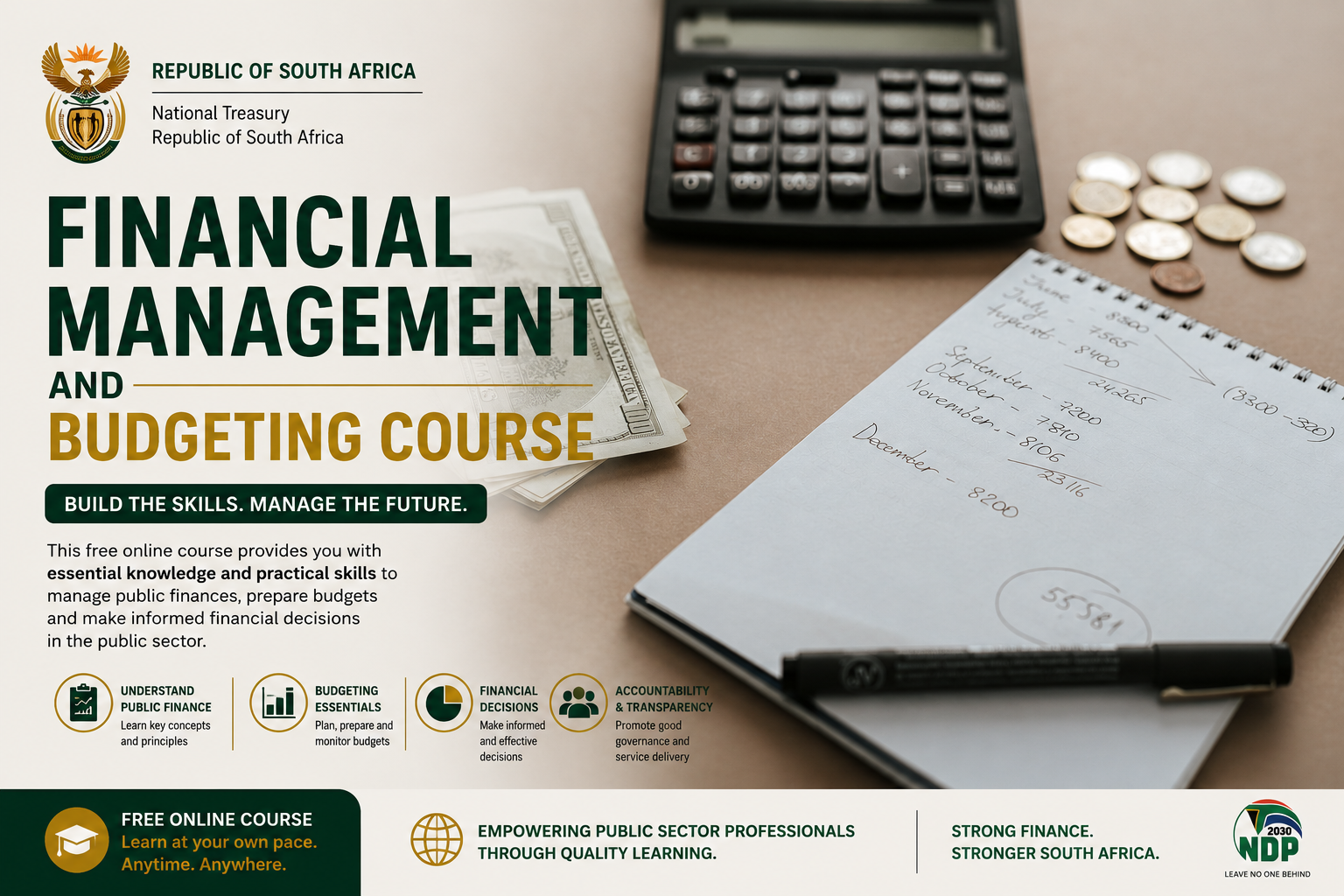
Introduction to Financial Management and Budgeting Course
The Introduction to Financial Management and Budgeting course provides an opportunity to develop core financial management and budgeting skills that can support workplace performance in the public service. The course offers approximately 8 hours of self-paced online learning, allowing participants to work through the material around their personal schedules. It covers public-sector financial management, budgeting,…
-
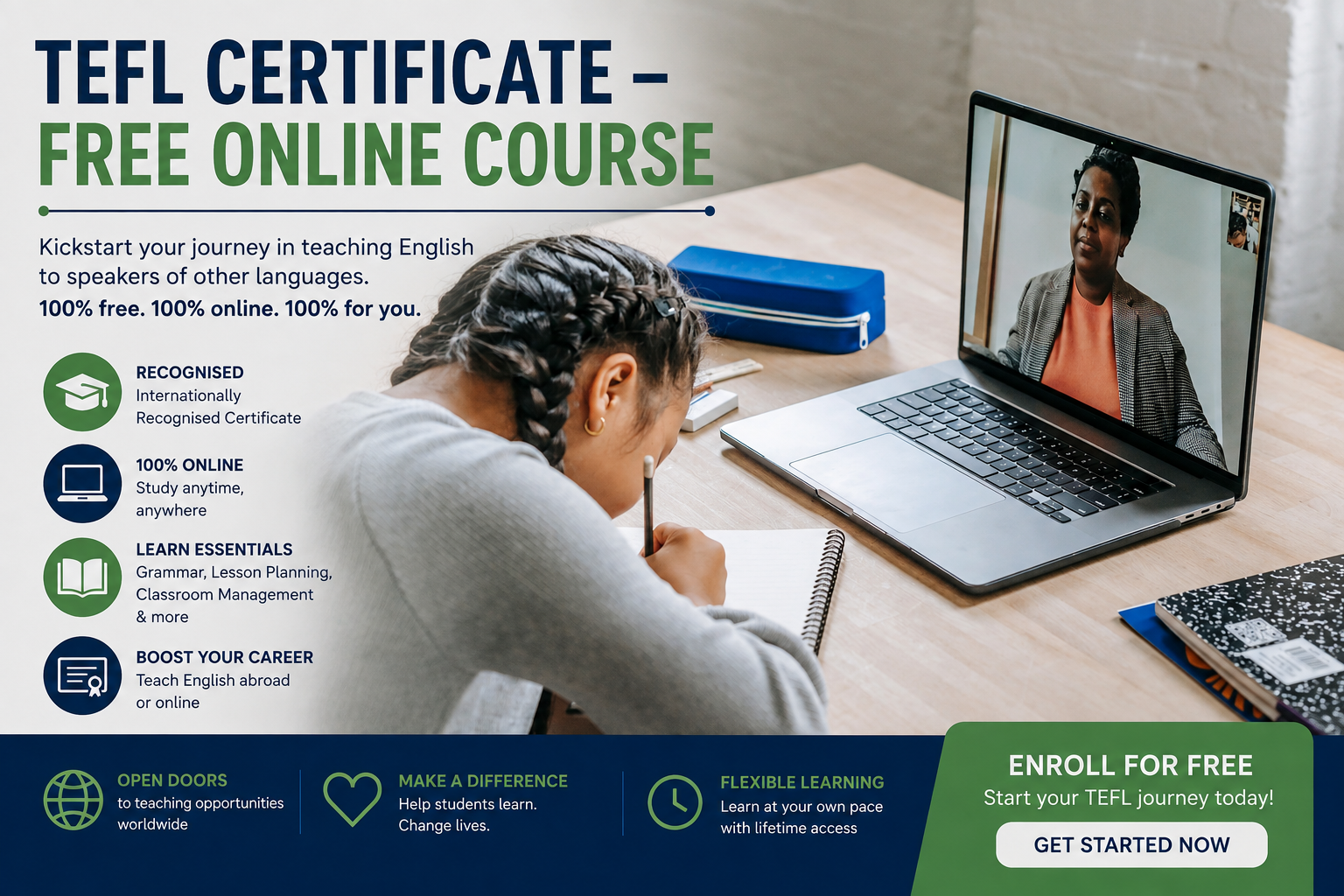
TEFL Certificate – Free Online Course
Looking for a 120-Hour TEFL Certificate that you can complete online? TeacherRecord offers a free online TEFL course designed for people interested in developing English teaching skills and exploring teaching opportunities online or abroad. The course provides access to online learning materials and covers important areas such as lesson planning, English grammar, listening, reading, speaking,…
-
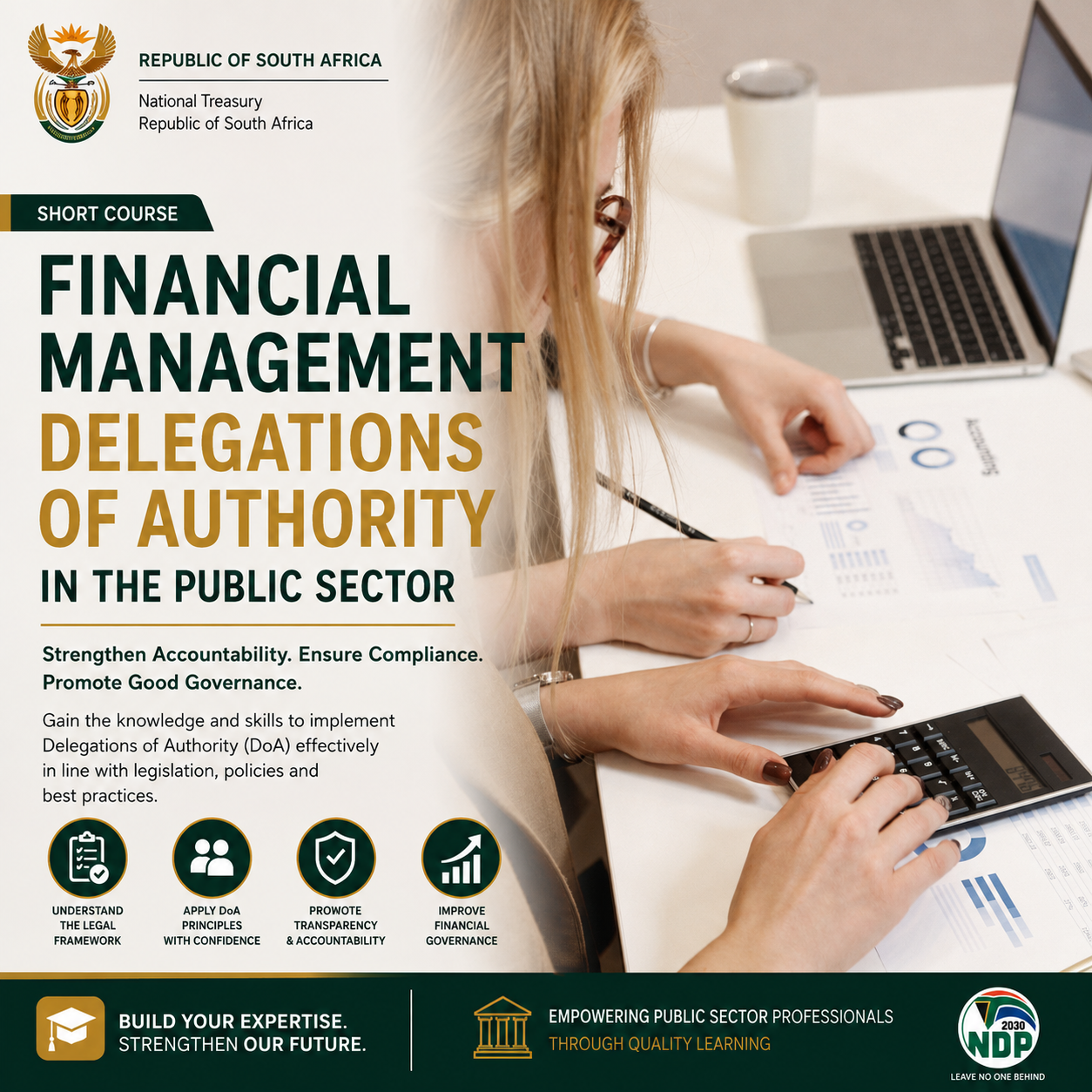
Financial Management Delegations of Authority – Public Sector Course
Provider: National School of Government (NSG) Programme: NSG Digital Skills Programme 2026 Course: Financial Management Delegations of Authority Partners: National Electronic Media Institute of South Africa (NEMISA) and Microsoft through the Microsoft Elevate programme.
-
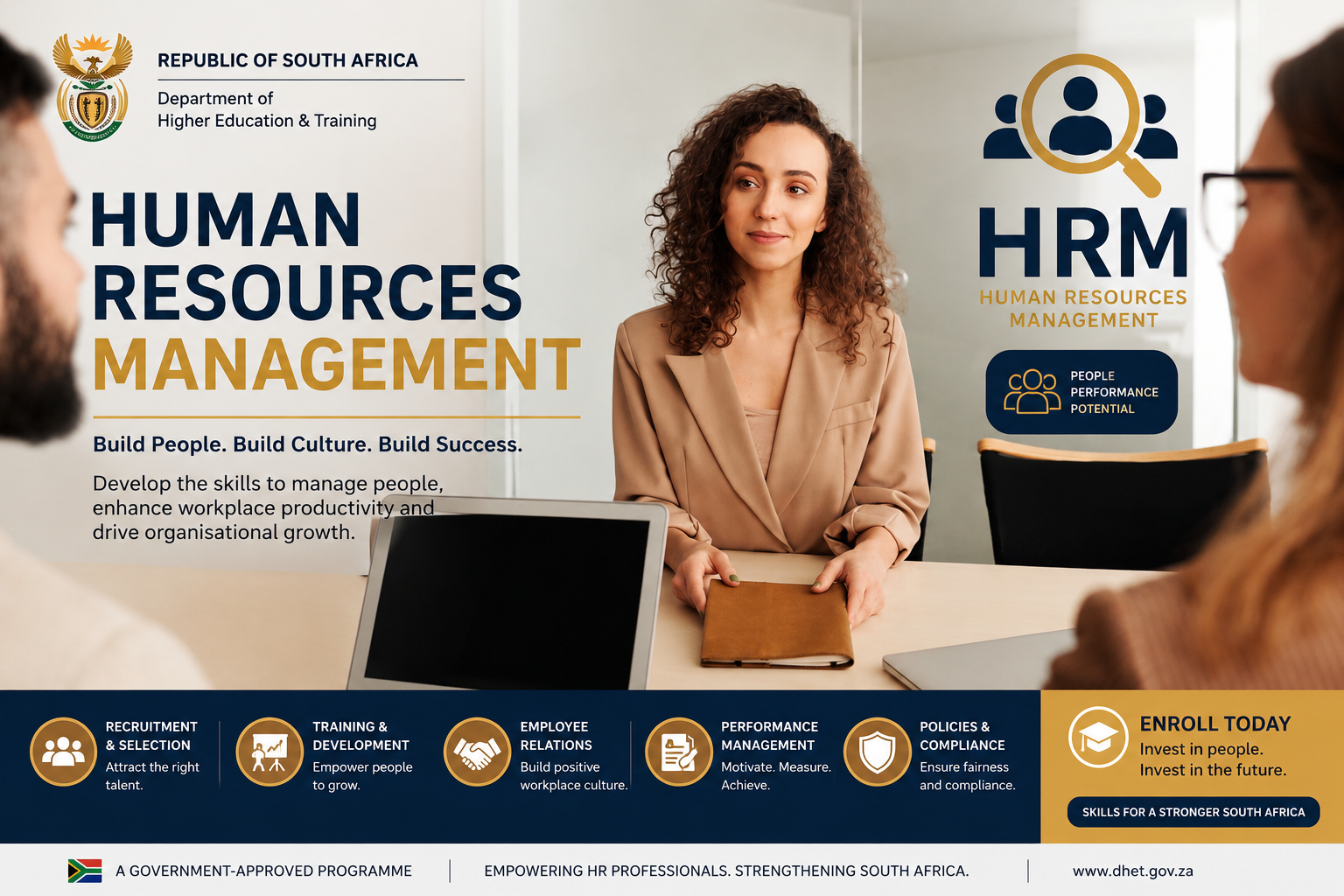
Introduction to Strategic Human Resources Management Course
Provider: National School of Government (NSG) Programme: NSG Digital Skills Programme 2026 Course: Introduction to Strategic Human Resources Management Course Partners: National Electronic Media Institute of South Africa (NEMISA) and Microsoft through the Microsoft Elevate programme.